

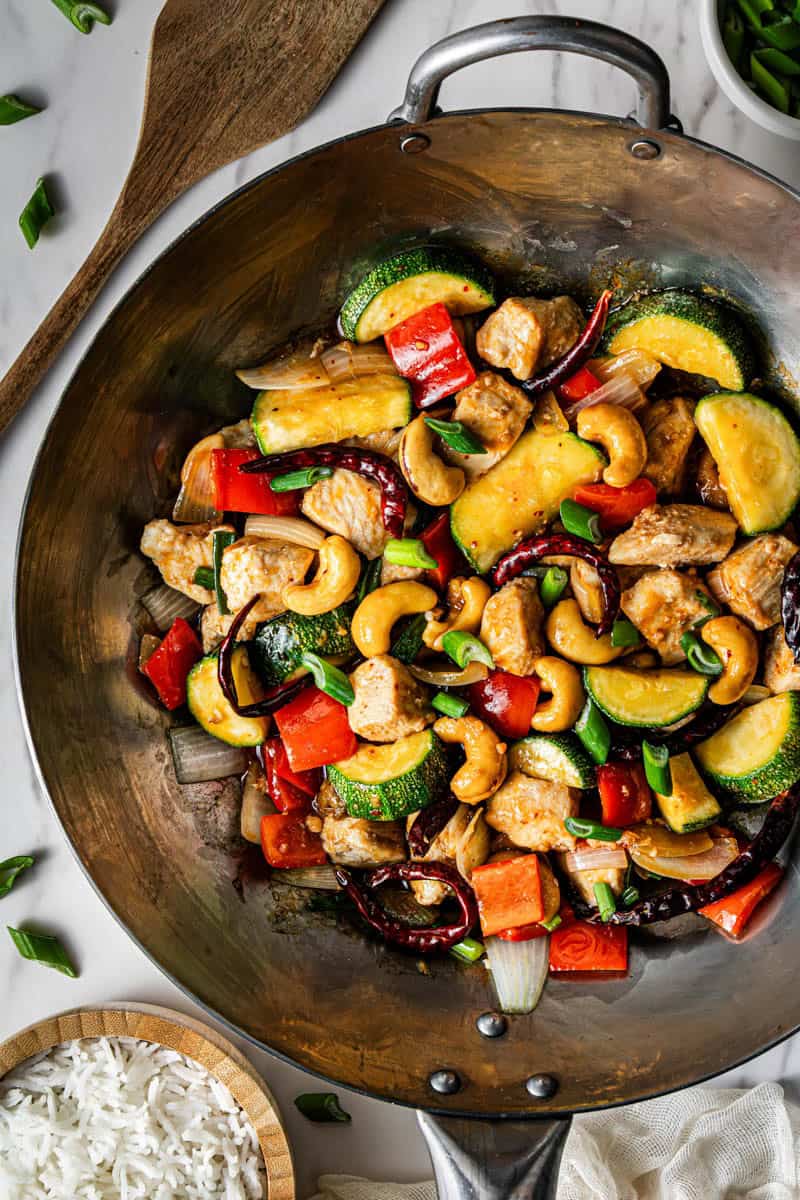
If you've ever stood in the Panda Express line just for the Kung Pao Chicken, this recipe is about to change your weeknights for good. This Panda Express Kung Pao Chicken copycat delivers the same bold, sweet-spicy-savory flavor you love: juicy chicken thighs, crisp veggies, roasted nuts, and a glossy homemade kung pao sauce. And it's all on the table in 30 minutes flat.
I've tested this recipe multiple times to nail the sauce balance and the right stir-fry technique, and I'm confident this is as close as you'll get to the restaurant version without leaving your kitchen.
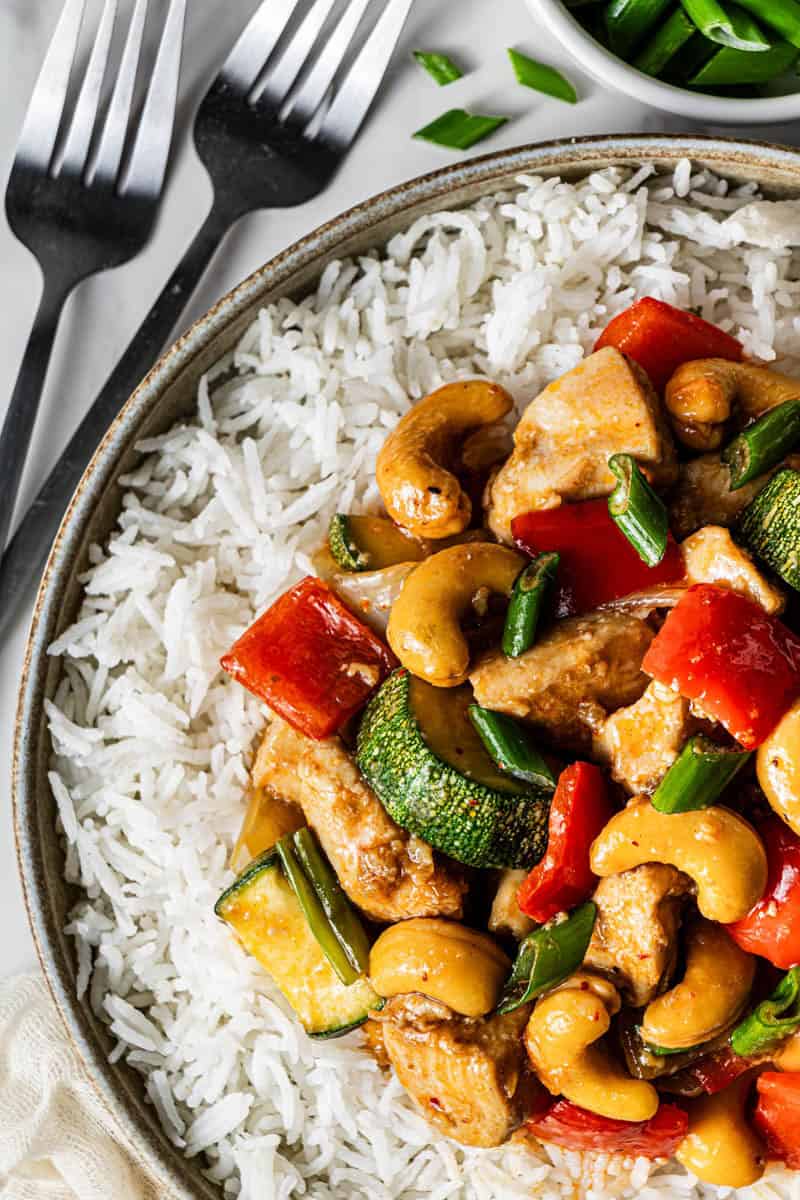
Why You'll Love This Recipe
This Panda Express Kung Pao Chicken copycat checks every box for a weeknight dinner win. It's on the table in 30 minutes, made with ingredients you can find at any grocery store, and genuinely tastes like the real thing. It's lower in sodium than the restaurant version, easy to customize to your spice preference, and the leftovers hold up well for lunch the next day. Once you make it at home, the drive-through stops making sense.
Why This Copycat Works
The difference between a good kung pao copycat and a great one comes down to two things: the sauce and the chicken cut. Using boneless, skinless chicken thighs instead of breast means the protein stays juicy at high stir-fry heat and avoids dry, chewy bites. The short Shaoxing wine marinade tenderizes the chicken and adds depth that plain soy sauce alone can't.
The sauce uses dark soy sauce for color and depth, oyster sauce for a glossy, savory cling, chili crisp for layered heat, and rice vinegar to brighten the whole thing. It's the combination that makes it taste like Panda Express and not just any kung pao chicken.
Ingredients for Panda Express Kung Pao Chicken Copycat
Here's everything you'll need. Each ingredient plays a specific role in getting this as close to Panda Express as possible.
Chicken & Marinade
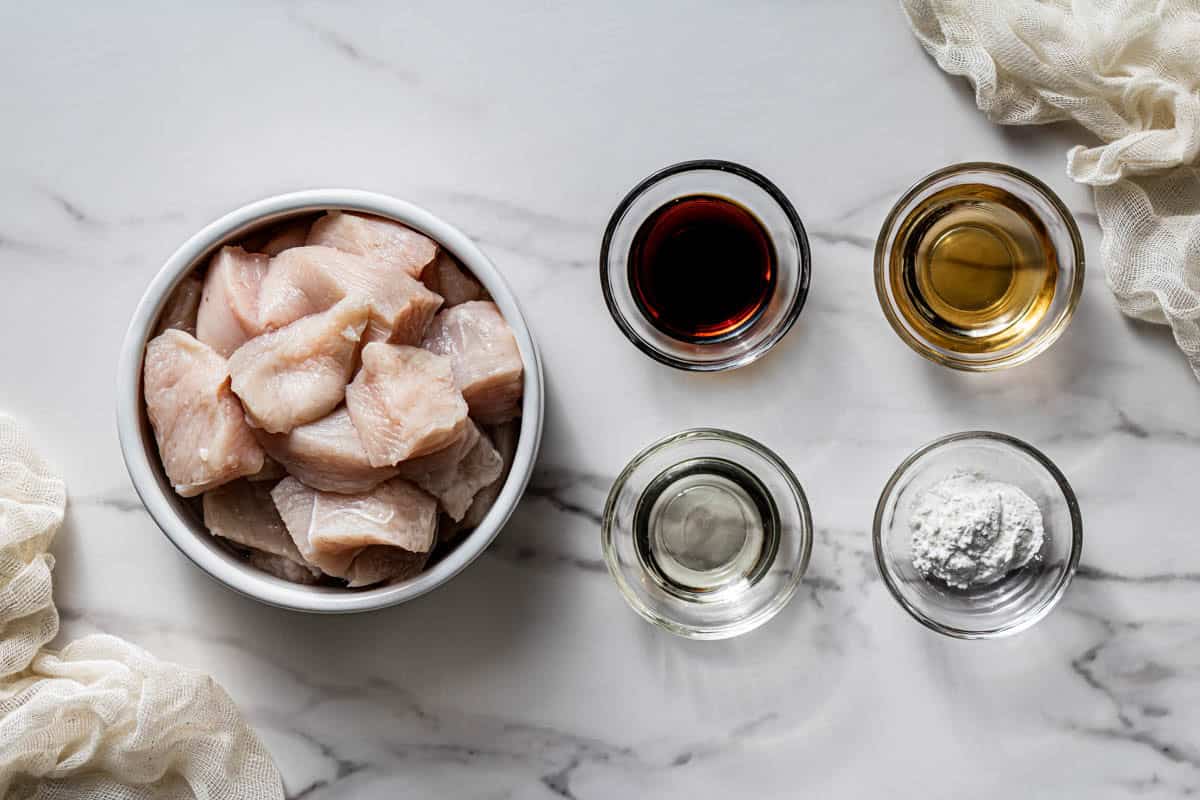
Boneless, skinless chicken thighs: Thighs stay juicy during high-heat stir frying in a way that chicken breast simply doesn't. Cut them into bite-sized pieces for even cooking.
Low sodium soy sauce: Adds umami and seasoning without making the dish overly salty.
Shaoxing wine (or dry sherry): This is the marinade step most people skip. It tenderizes the chicken and adds a subtle depth of flavor that makes a real difference. Dry sherry is a reliable substitute if you can't find Shaoxing wine.
Cornstarch: Coats the chicken so the sauce clings to every bite and helps create a lightly sealed exterior during cooking.
Vegetable oil: Just a small amount keeps the chicken pieces separate in the marinade.
Vegetables & Aromatics
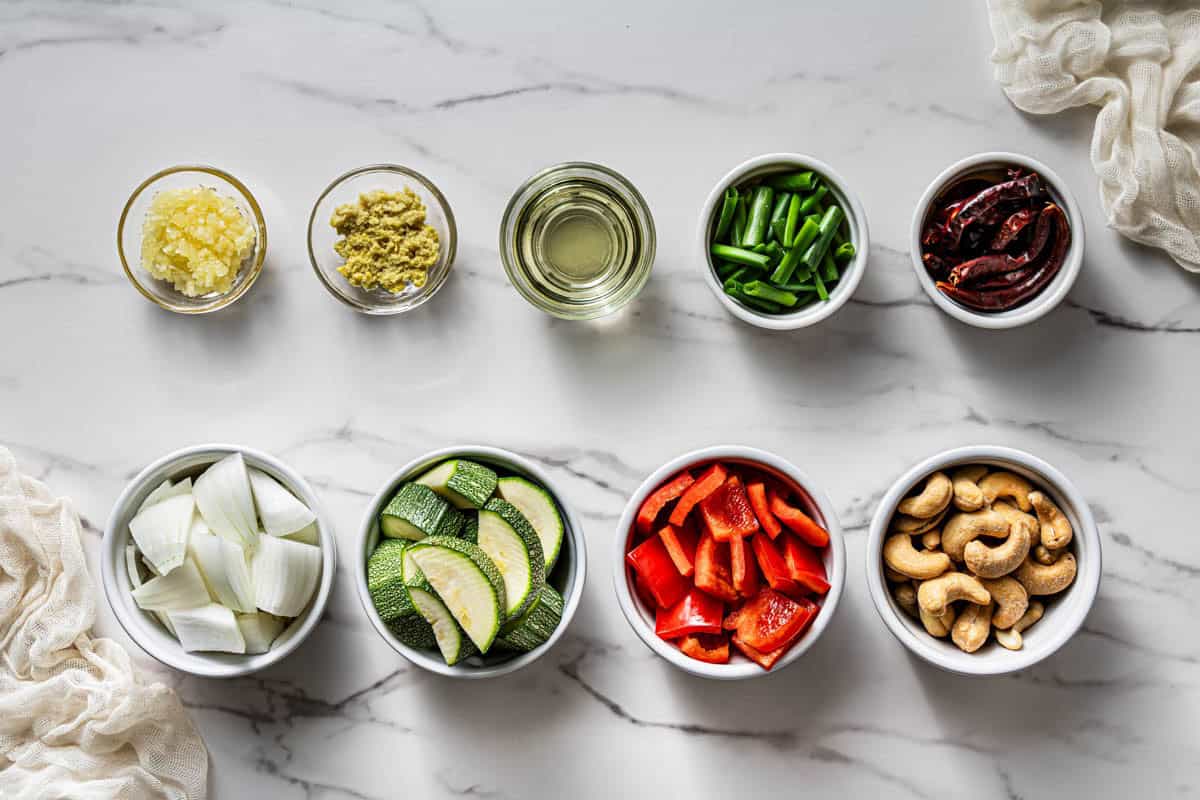
Zucchini: Adds color and a light crunch that holds up well in the wok.
Red bell pepper: Its natural sweetness balances the heat in the sauce perfectly.
Medium onion: Provides a savory, slightly sweet backbone to the dish.
Garlic & fresh ginger: The non-negotiable stir-fry aromatics. Use fresh, not jarred, for the best flavor.
Dried chili peppers: These give the dish its signature Panda Express heat. Leave them whole for mild heat, or break a few in half for a hotter heat.
Scallions: Stirred in at the end for freshness. Reserve the green tops to use as garnish.
Unsalted roasted nuts: The classic crunchy finish. Unsalted keeps the salt level of the overall dish in check. You can use peanuts or cashews.
Kung Pao Sauce
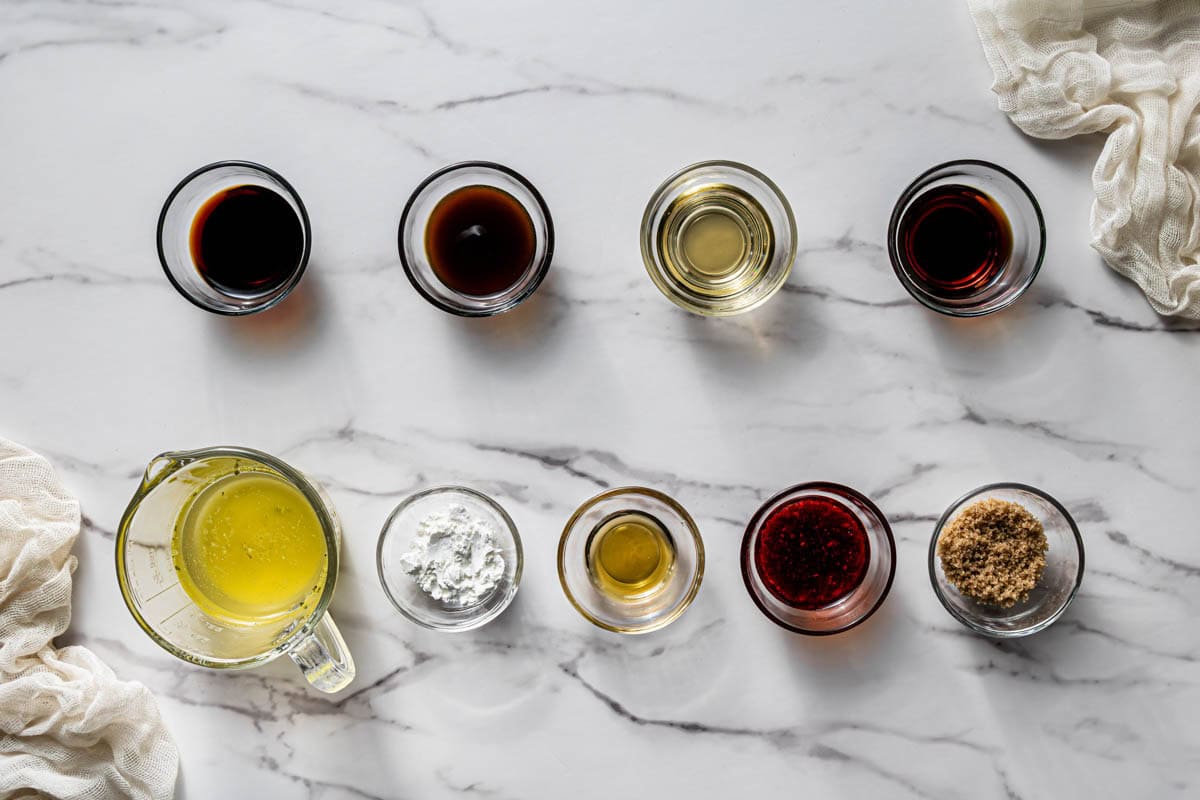
Low sodium chicken broth: Forms the rich, savory base of the sauce.
Dark soy sauce: Adds the deep color and extra savory depth you see in the restaurant version.
Oyster sauce: Creates that glossy, clinging sauce quality that makes every bite flavorful.
Rice vinegar: Brightens and balances the richness. Rice wine vinegar works too.
Brown sugar: Balances the spice with a touch of sweetness, just like Panda Express does.
Chili crisp: This is what gives the sauce its rich, layered heat beyond just the dried peppers.
Sesame oil: Stirred in at the end for a nutty, aromatic finish.
Cornstarch + water (slurry): Thickens the sauce to that glossy, restaurant-quality consistency.
How to Make Panda Express Kung Pao Chicken Copycat
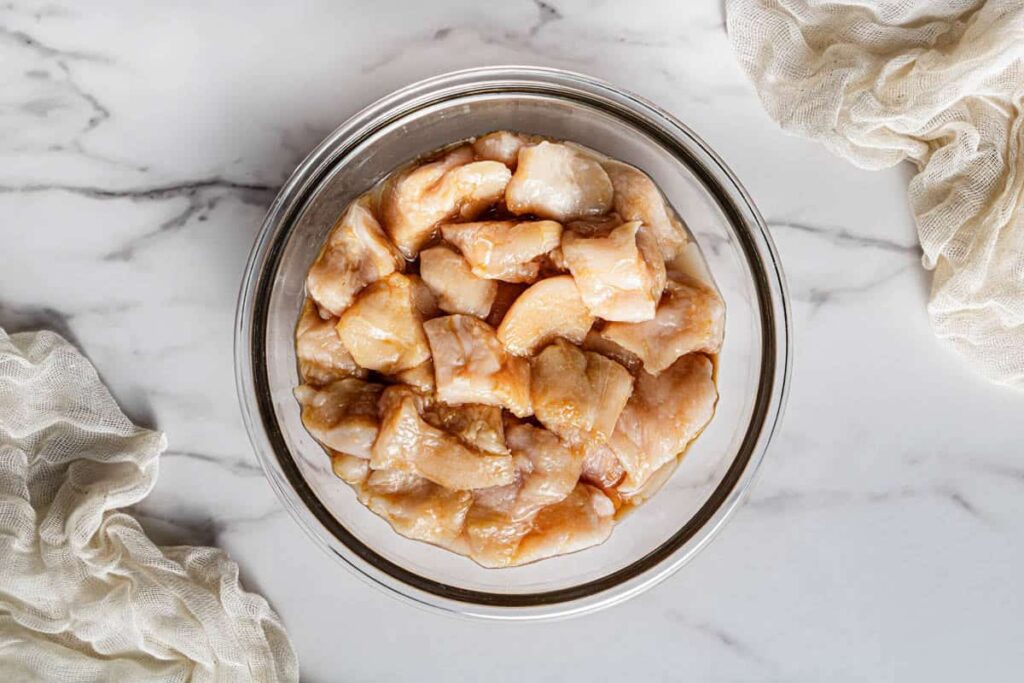
Step 1. Marinate the Chicken
Combine the chicken pieces with soy sauce, Shaoxing wine, cornstarch, and a small drizzle of oil. Toss to coat, then let it sit for 15 to 30 minutes. This short marinade locks in moisture and helps the sauce cling better during cooking. Don't skip it.
Step 2. Mix the Kung Pao Sauce
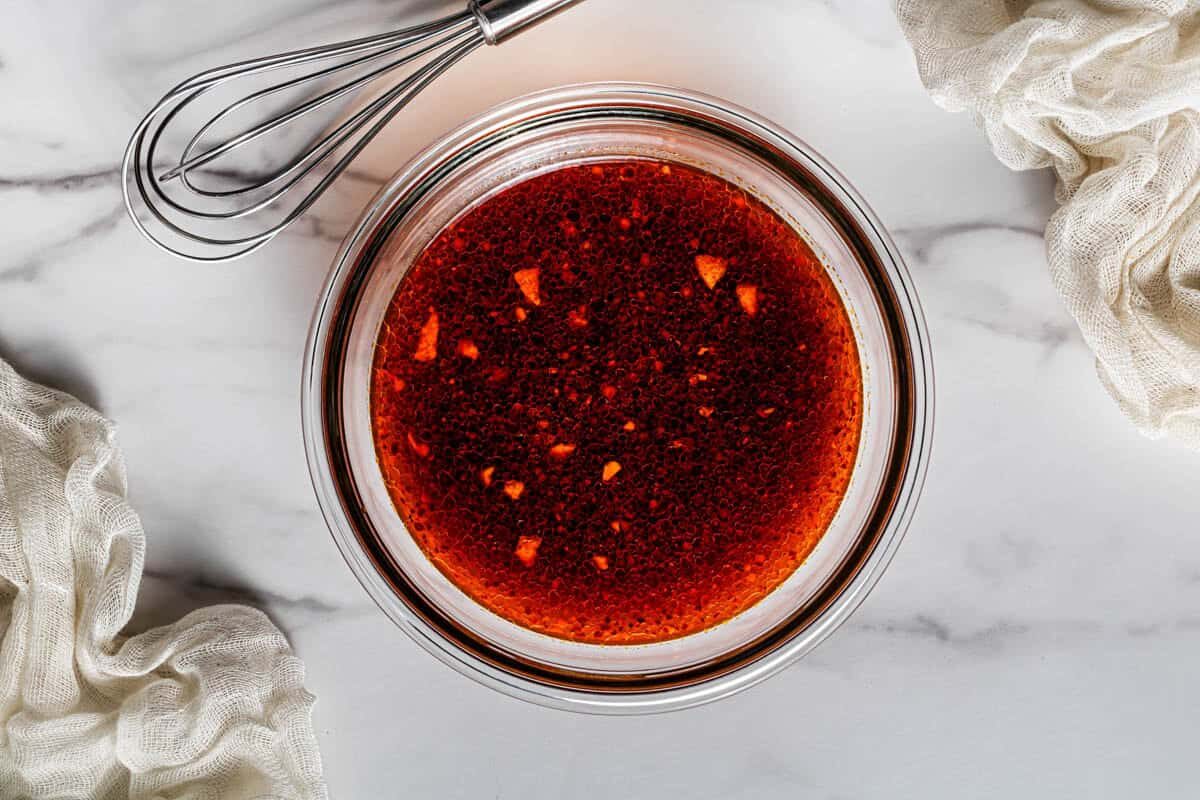
Whisk all the sauce ingredients together in a small bowl until smooth. Set it nearby before you start cooking; stir-frying moves fast. Give it another quick stir right before you add it to the pan, since the cornstarch settles to the bottom.
Step 3. Cook the Chicken
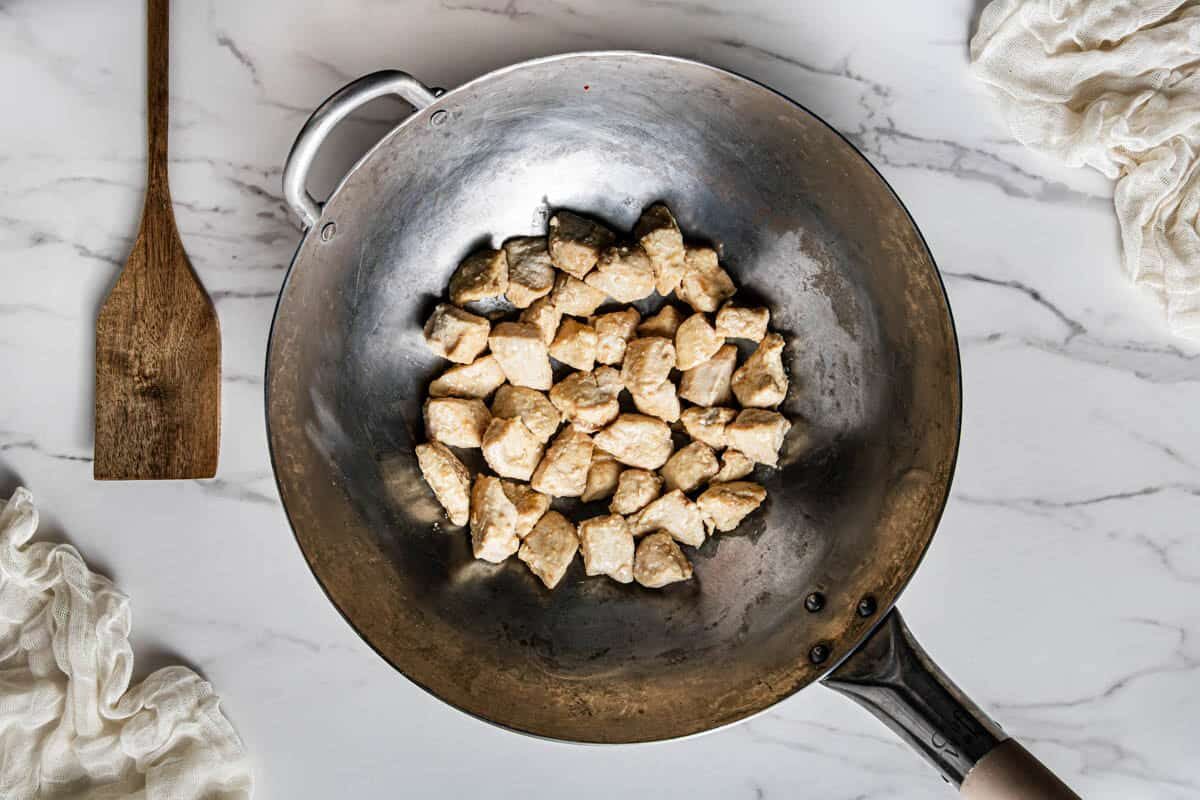
Heat 1 tablespoon of oil in a large wok or skillet over medium-high heat. Add the marinated chicken in a single layer and cook 1 to 2 minutes per side, just until lightly browned. You're not cooking it all the way through yet. Remove the chicken and set it aside.
Step 4. Stir-Fry the Vegetables
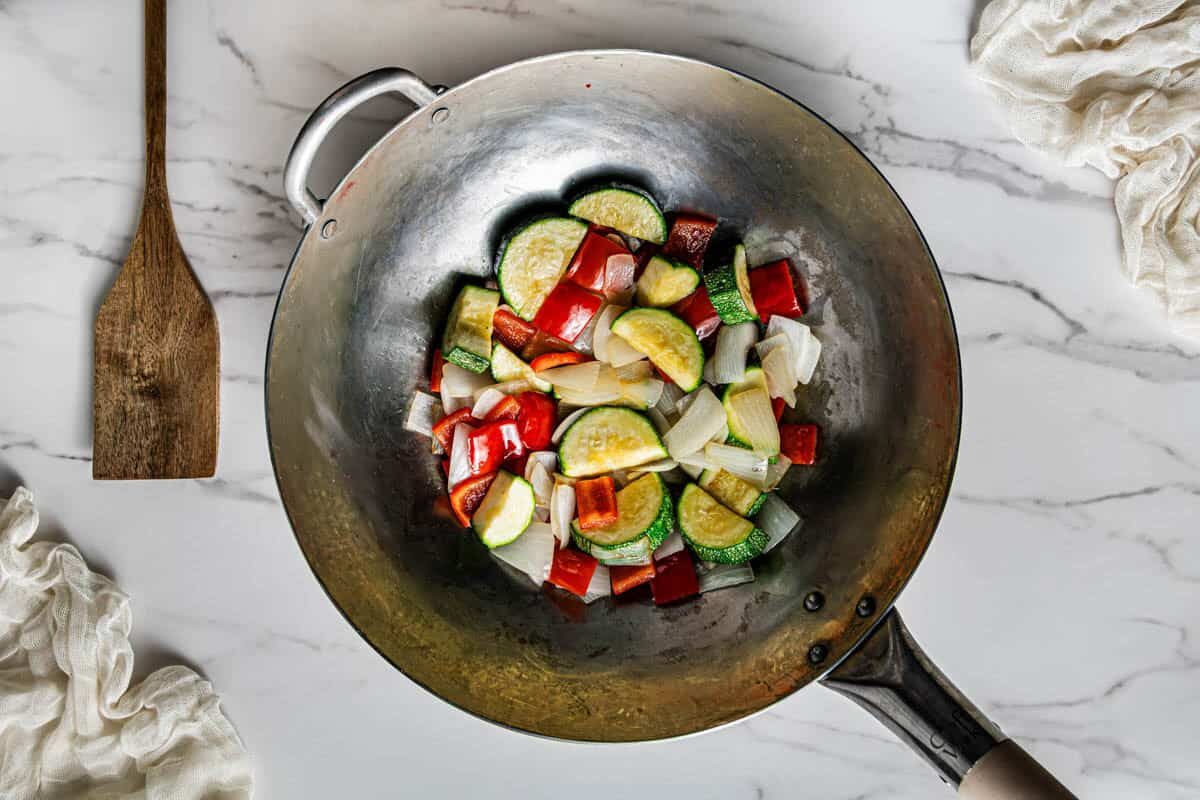
In the same pan, add another tablespoon of oil. Add the zucchini, onion, and red bell pepper. Stir-fry for 2 to 3 minutes, just until crisp-tender. You want them to have a little bite left since they'll continue to cook when you add everything back in.
Step 5. Add Aromatics
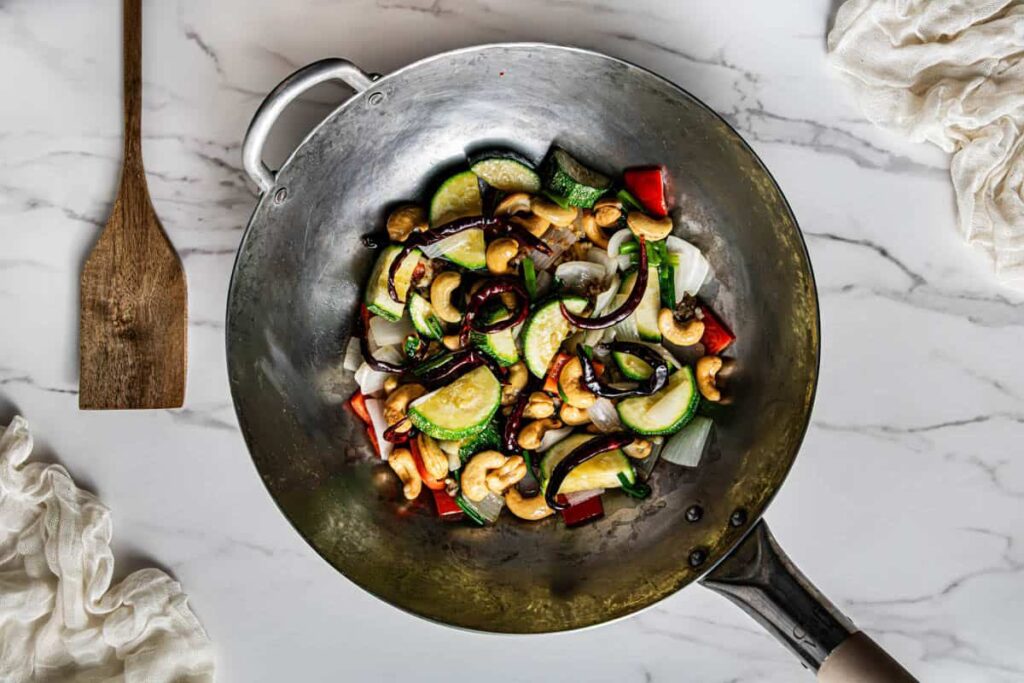
Push the vegetables to the side and add the garlic, ginger, and dried red chilies directly to the pan. Stir for about 30 seconds until fragrant. This step is where the dish really comes alive.
Step 6. Bring It All Together
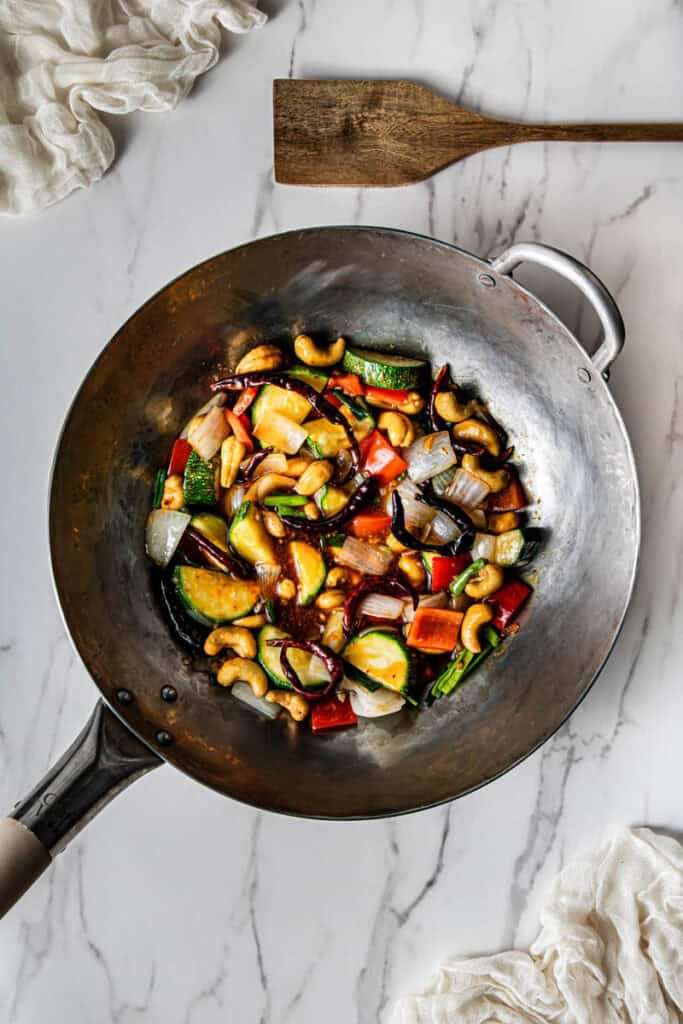
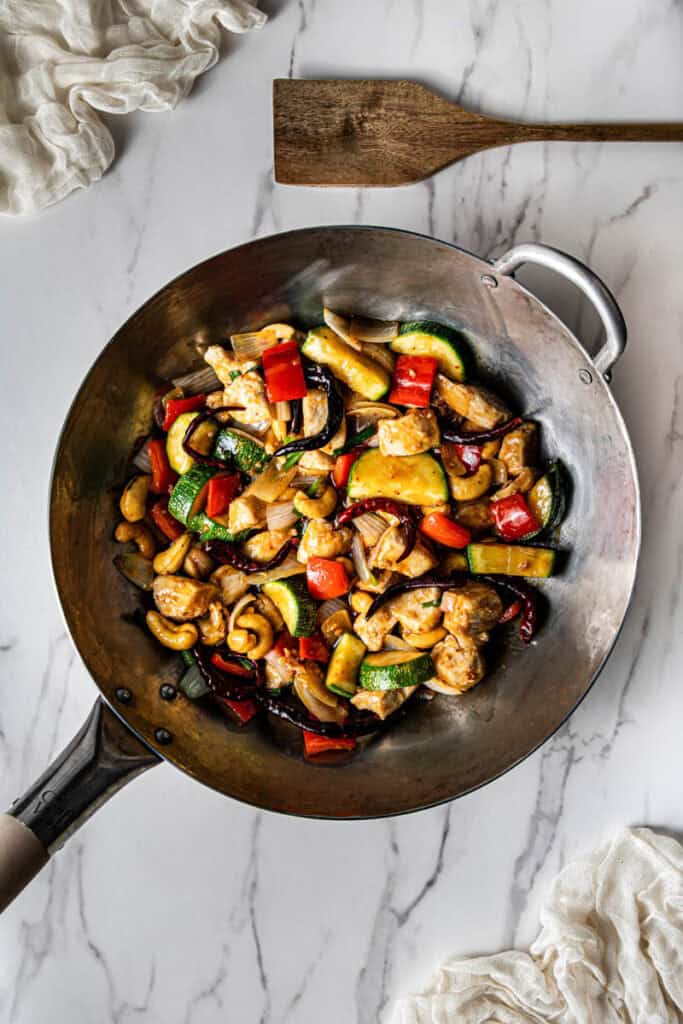
Pour the sauce into the pan and let it bubble for about 1 minute until it thickens. Add the chicken back in along with the nuts and scallions. Toss everything until evenly coated in that glossy kung pao sauce.
Step 7. Serve
Serve immediately over steamed white rice or fried rice. Garnish with the reserved scallion greens. Enjoy your homemade Panda Express Kung Pao Chicken!
Tips for the Best Copycat Kung Pao Chicken
Get the wok screaming hot. High heat is what creates that slightly smoky, restaurant-style flavor (called "wok hei"). A cold or lukewarm pan will steam your ingredients instead of searing them.
Adjust heat to your preference. Keep the dried chilies whole for mild heat. Break them in half or add more for extra spice. The chili crisp in the sauce also adds a separate layer of heat you can increase or reduce.
Don't overcook the vegetables. Pull them off the heat while they still have a little snap. Soggy veggies will throw off the texture of the whole dish.
Stir the sauce before adding it. Cornstarch sinks to the bottom as it sits. Always give the sauce a quick stir right before it hits the pan.
Add nuts at the very end. Stirring them in last keeps them crunchy rather than soft.
Meal prep tip: Marinate the chicken and mix the sauce up to 24 hours ahead. The chicken actually gets more tender the longer it sits in the marinade. When it's time to cook, dinner is on the table in under 15 minutes.
What to Serve with Kung Pao Chicken
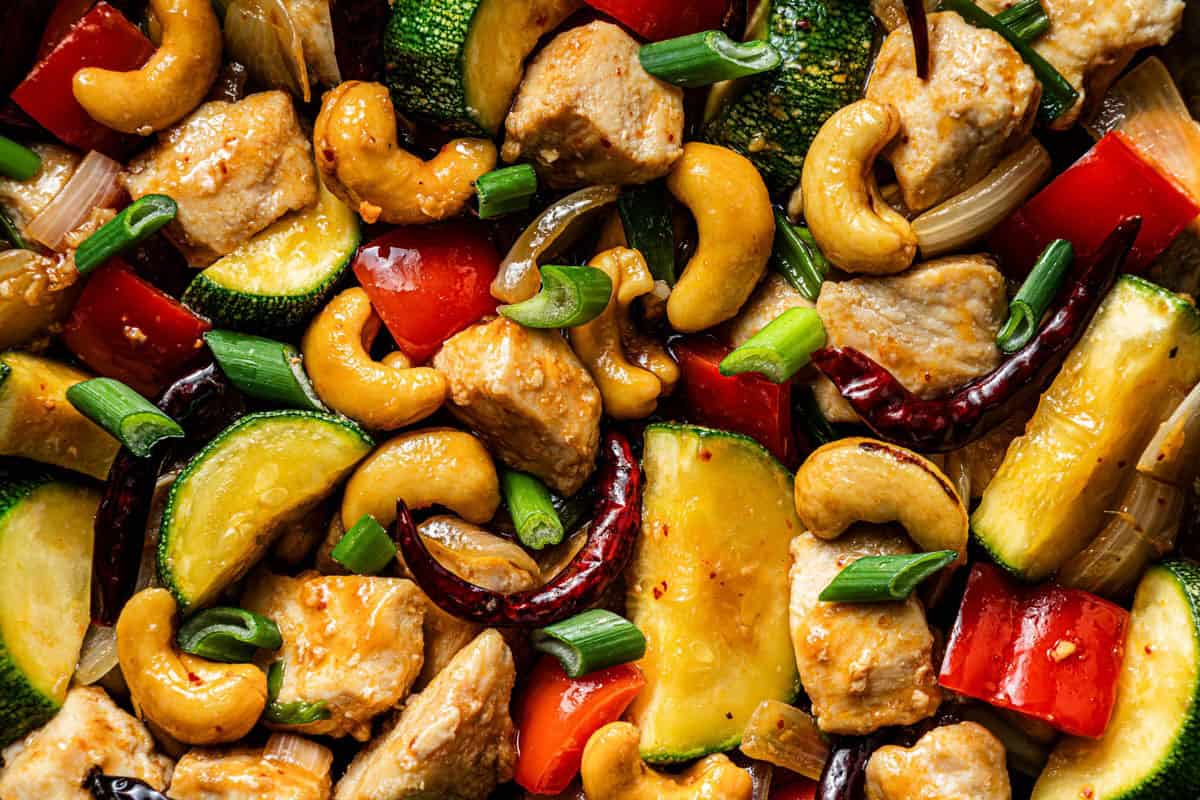
This dish pairs best with steamed white rice or brown rice, which soak up the extra kung pao sauce perfectly. For a fuller meal, add a side of veggies, potstickers/dumplings, or egg rolls. Fried rice also works great and leans into the full takeout-at-home experience.
How to Store and Reheat
Store leftovers in an airtight container in the refrigerator for up to 3 days. Reheat in a skillet over medium heat with a splash of chicken broth or water to loosen the sauce. Avoid the microwave if you want to keep the vegetables from getting too soft, though it works fine for a quick lunch.
Frequently Asked Questions
Yes. Boneless skinless chicken breast works fine in this recipe. Just be careful not to overcook it, since breast meat dries out faster than thighs at high stir-fry heat. Cut it into even bite-sized pieces and watch the cook time closely.
Dry sherry is the closest substitute and widely available in most grocery stores. In a pinch, a small amount of apple juice or chicken broth can work, though the depth of flavor won't be quite the same.
This recipe is moderately spicy similar to the restaurant version. To reduce the heat, leave the dried chilies whole and use less chili crisp. To increase the heat, break the chilies in half and add extra chili crisp or a pinch of red pepper flakes.
Yes. Swap the low sodium soy sauce for tamari and use a certified gluten-free oyster sauce. All other ingredients in the recipe are naturally gluten-free.
Use a neutral, high-smoke-point oil like canola oil or vegetable oil. Avoid olive oil because it burns at the high temperatures needed for stir frying.
Absolutely. Marinate the chicken and mix the sauce up to 24 hours in advance and store them separately in the fridge. When ready to cook, the stir-fry itself takes under 15 minutes.
Yes. Green bell pepper, snap peas, broccoli, or green beans all work well as substitutes or additions. Keep the total volume of vegetables roughly the same so the sauce-to-ingredient ratio stays balanced.
Use low sodium soy sauce (not regular), unsalted nuts, and low sodium chicken broth. A small additional pinch of brown sugar can also help balance any saltiness.
Not exactly. Traditional Sichuan kung pao chicken uses Sichuan peppercorns for a numbing, tingly heat and typically doesn't include zucchini. Panda Express's version is Americanized: milder, slightly sweeter, and more approachable. This copycat is designed to replicate the Panda Express version specifically.
Panda Express Kung Pao Chicken Copycat
Ingredients
Chicken & Marinade
- 1 lb 450 g boneless, skinless chicken thighs, cut into ½-inch cubes
- 1½ tsp low-sodium soy sauce
- 1 tbsp Shaoxing wine or dry sherry
- 1 tsp cornstarch
- 1 tsp neutral oil canola/vegetable
Veggies & Aromatics
- 1 medium zucchini halved lengthwise & sliced ¼-inch thick
- 1 medium red bell pepper cut into 1-inch chunks
- ½ medium onion cut into 1-inch chunks
- 3 –4 cloves garlic minced
- 2 tsp fresh ginger minced
- 8 –10 dried red chili peppers whole, for aroma; break in half for more spice
- 2 scallions cut into 1-inch pieces (reserve green tops for garnish)
- ½ cup 70 g roasted, unsalted peanuts (or cashews)
Kung Pao Sauce
- ⅓ cup 80 ml low-sodium chicken stock (or water + ½ tsp bouillon)
- 1 tbsp dark soy sauce or regular soy if not available
- 1 tbsp oyster sauce
- 1 tbsp rice vinegar or Chinese black vinegar if available
- 1 tbsp light soy sauce
- 1 tbsp brown sugar packed
- 1 tbsp chili crisp Laoganma recommended
- ½ tsp sesame oil
- 1 tsp cornstarch
For Cooking
- 2 tbsp neutral oil divided

Instructions
- In a bowl, mix chicken with soy sauce, Shaoxing wine, cornstarch, and oil. Let sit 15–30 minutes (or up to overnight in fridge).
- In a small bowl, whisk chicken stock, dark soy, oyster sauce, black vinegar, light soy, brown sugar, chili crisp, sesame oil, and cornstarch. Stir again before using.
- Heat 1 tbsp oil in a wok or large skillet over high heat. Add chicken in a single layer, sear 1 minute, flip, and cook another 2 minutes until just cooked. Remove to a plate.
- Add another 1 tbsp oil to wok. Toss in zucchini, bell pepper, and onion. Stir-fry 2 minutes until slightly charred but still crisp. Push to sides.
- Add garlic, ginger, dried chilis, and scallion whites. Stir-fry 30–60 seconds until fragrant (don’t burn garlic). Add peanuts, toss.
- Stir sauce again (cornstarch settles) and pour into wok. Let it bubble 1–2 minutes until thickened.
- Return chicken and scallion greens to wok. Toss everything until glossy and coated.
- Plate hot over steamed jasmine rice or fried rice. Garnish with extra scallions.
Notes
- Chicken thighs + velveting marinade → juicy and authentic.
- Balanced sauce → sweet (brown sugar), savory (oyster, soy), tangy (black vinegar), spicy (chili crisp + dried chilis).
- Crisp-tender veggies → not mushy, keeps Panda Express style.
- Peanuts for crunch → traditional and texturally perfect.
- Quick wok technique → smoky sear, real takeout taste.


leave a comment